Key takeaways
- Military service shapes how patients communicate, seek help, and take part in treatment, but experiences vary widely by branch, rank, military occupational specialty (MOS), unit, and length of service.
- Service Members and Veterans seek mental health care for many reasons. Avoid assuming PTSD or military-related trauma is the primary concern.
- Short answers, quiet agreement, or comments like “this isn’t helping” may reflect cultural differences rather than resistance or misunderstanding.
- Saying “You’re safe now, relax” can feel dismissive and damage the provider/patient relationship.
- Providing structure, setting clear goals, and using familiar terms like “training” or “reps” can help patients engage in treatment.
- Stigma, concerns about career implications, and fears about privacy can keep some Service Members and Veterans from seeking care.
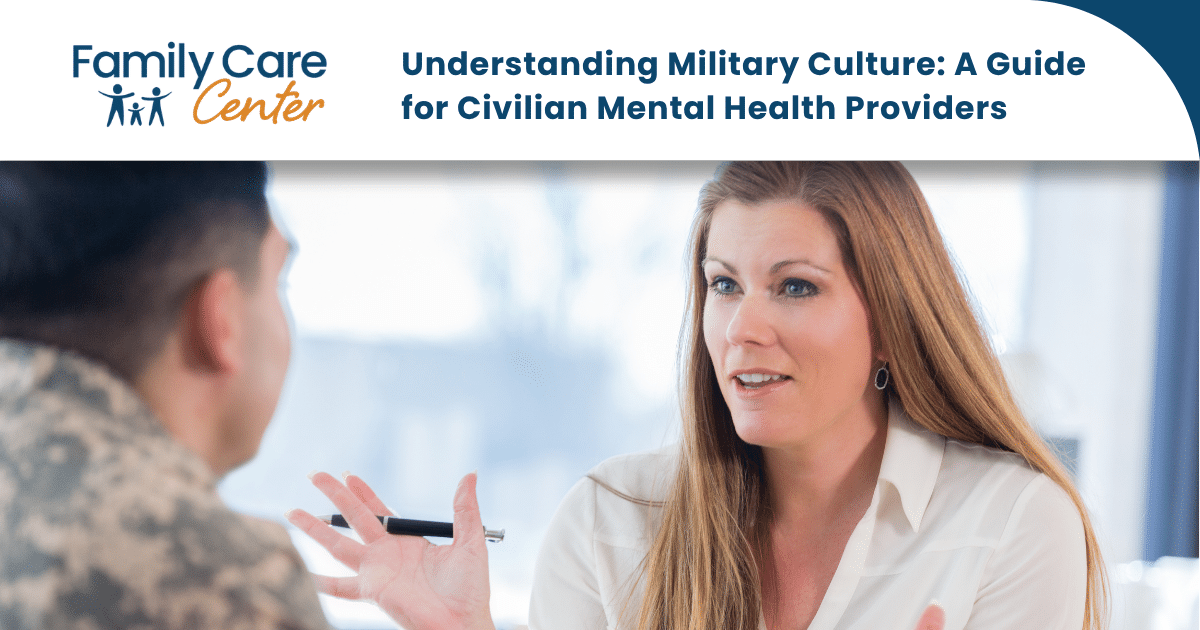
In the U.S., there are about 1.3 million active-duty Service Members, 800,000 in the Selected Reserve and National Guard, and over 18 million Veterans. Many choose civilian providers for care due to greater access to care, proximity off base, concerns about stigma, or personal reasons. When providers understand military culture, they build trust more quickly and help patients stay involved in treatment. Without that understanding, even small misunderstandings can lead to mistrust, patient dropout, or care that doesn’t meet their needs. It may also be frustrating for the provider, as the patient may appear disengaged,but may be benefiting.
How military culture affects communication in therapy
Military service has an impact on the way people talk, the way they see themselves, and the way they feel about asking for help. Those habits don’t just disappear when they come to see a provider.
People in the military usually communicate in a brief, direct, and focused way. They don’t often show emotion, respect rank and authority, and only share information when needed or directly asked.
Now, consider a therapy session where patients are often asked to talk openly, share feelings, and give more details. A Service Member or Veteran might give short answers, skip emotional details, and wait for direct questions rather than share more on their own.
The chain of command adds another layer. Years of conditioning around following hierarchy and avoiding unnecessary disruption can show up as hesitation to disagree, reluctance to ask for changes, or agreement without real buy-in. That can create a false sense of engagement, followed by poor follow-through.
Pace is important, too. Military training teaches people to make quick decisions, act under pressure, and put emotions aside to get the job done. In therapy, patients are asked to slow down and reflect, so it’s common to hear things like “This isn’t helping” or “Why are we talking about feelings? How does talking even help?”
What might seem like resistance or lack of insight is often just a cultural difference, not a problem with the patient. Noticing this difference is the first step to helping.
What not to say to Veterans and Service Members
Phrases that dismiss how a patient copes, such as “You’re safe now, relax,” can damage rapport even when they’re well-meant. Statements to avoid include:
- “You need to open up more.”
- “That’s not healthy.”
- “Why didn’t you just say something?”
- “You’re safe now, relax.”
- “That was a long time ago.”
These kinds of responses can feel judgmental. They ignore the training and experience that shape how a patient copes, and they miss the importance of military culture.
Assumptions cause similar harm. Never assume that a Veteran saw combat, since leading with that assumption can leave a patient feeling unseen. It also helps to steer clear of political comments or anything that could read as bias against the military. Neutral, respectful curiosity keeps the focus where it belongs: on the patient’s experience.
How to build rapport with military-connected patients
Structure, clear aims, and the use of familiar language all help the Service Member or Veteran to get involved in treatment. Start by saying something along the lines of ‘Tell me about your military service’ as that gives the patient the opportunity to decide what they want to tell you and demonstrates that you’re genuinely interested. You can also use their rank appropriately where it’s relevant. Consider asking them if they would prefer you to use their rank: “How should I address you?”
From there, a few approaches tend to strengthen engagement:
- Use familiar language. Words like “skill-building,” “training,” and “reps” feel more natural than abstract therapeutic terms.
- Be explicit. Define goals and the purpose behind each part of treatment.
- Offer structure. Agendas, plans, and clear next steps match how many Service Members are used to working.
- Invite feedback directly. Saying “If this doesn’t work, we adjust. Just tell me.” makes it easier for patients to speak up.
It is also useful to recognize and respect stoicism, while gently challenging it. Many patients have relied on stoicism. By acknowledging it, you can build trust before exploring where it might be a barrier. Working together as a team, like a “battle buddy,” can feel familiar and motivating.
Signs a military-connected patient may be struggling
Because many Service Members and Veterans don’t volunteer what they’re going through, providers should watch for signs like feeling on edge, emotional numbness, and social withdrawal.
Stigma is still one of the biggest reasons that Veterans and soldiers will avoid care. There’s a very real fear that if you ask for help, it will be perceived as weakness or that you will be associated with “malingerers.” There’s a belief that treatment will somehow damage your career or your relationship with your command. The ‘suck it up’ mentality will see people put off seeking care until their symptoms are much worse, and the fears around privacy or job loss will see them put it off even longer.
Since military-connected patients might not share what they’re going through, it’s helpful to know what signs to look for:
- Feeling tense, jumpy, or on edge
- Emotional numbness or detachment
- Mood swings and intrusive memories
- Social withdrawal and avoidance
- “I used to” language
Spotting PTSD, traumatic brain injury (TBI), military sexual trauma (MST), suicide risk, and transition stress early is key to good care. The patient’s situation matters, too. Things like a recent move, a tough relationship after deployment, or pressure from command can all affect what the patient is dealing with. When you can, and with the patient’s permission, working with military behavioral health providers can help maintain consistent care.
Military-connected patients bring resilience, teamwork, and a strong sense of purpose to treatment. Civilian providers who understand the culture behind these strengths can build trust and help patients stay involved.
If you’re working with a military-connected patient who needs additional support, Family Care Center is here to partner with you. Thank you for the care you bring to those who have served.