
For many people seeking help for depression, anxiety, trauma, or other mental health concerns, weekly therapy is an excellent place to start. It provides a safe space to explore challenges, build coping skills, and work toward lasting change.
But for some, one hour of therapy each week simply isn’t enough.
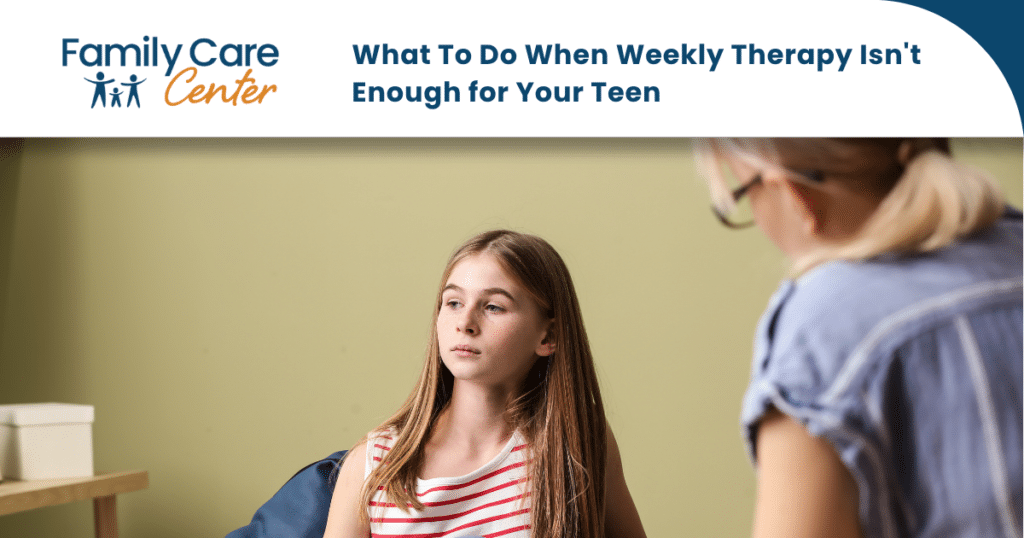
Understanding IOP vs. therapy can help individuals determine which level of care best meets their needs. When symptoms are more severe, daily functioning is affected, or progress feels slow, a mental health Intensive Outpatient Program (IOP) can provide the additional support needed to make meaningful progress while allowing people to continue living at home, working, or attending school.
Here’s how an IOP differs from traditional outpatient therapy and why it can make a meaningful difference.
Therapy and IOP: What’s the difference?
Traditional outpatient therapy typically consists of one individual session each week. Over time, these sessions can lead to significant progress, but the pace is naturally slower because there is more time between appointments to practice skills, process emotions, and navigate setbacks.
An IOP offers a much higher level of care without requiring hospitalization. Participants typically attend treatment four days a week for three hours each day over five to six weeks, combining evidence-based group therapy with individual support and psychiatric care when needed.
Rather than replacing therapy, IOP builds upon it by providing more frequent opportunities to learn, practice, and heal.

1. More therapy in less time
One of the biggest advantages of IOP vs. therapy is the intensity of treatment.
In just six weeks, participants receive approximately 72 hours of therapeutic programming. By comparison, someone attending one hour of therapy each week would need roughly 18 months to receive the same amount of therapeutic contact.
While healing isn’t measured simply by hours, increased therapeutic engagement allows people to:
- Practice new coping skills repeatedly
- Receive frequent feedback from clinicians
- Address challenges as they arise rather than waiting until the next week’s appointment
- Build momentum that supports lasting change
For many people, this concentrated approach helps them regain stability sooner.
2. The healing power of group support
A common misconception about IOP is that group therapy means simply talking about problems with strangers.
In reality, professionally facilitated group therapy is one of the most clinically effective parts of an Intensive Outpatient Program.
Many people living with depression, anxiety, or trauma feel isolated in their experiences. They may believe no one else understands what they’re going through.
Group therapy changes that.
Hearing others share similar struggles helps participants realize they are not alone. As trust develops, the group often becomes a source of encouragement, accountability, and hope. Participants celebrate one another’s successes, offer support during setbacks, and witness real examples of recovery happening around them.
That sense of community can be incredibly powerful, especially for those whose mental health challenges have led them to withdraw from others.
3. More support between individual sessions
In traditional outpatient therapy, difficult emotions or setbacks may occur several days before the next appointment.
IOPs shorten that gap.
Because participants attend multiple sessions each week, they have frequent opportunities to discuss challenges, receive guidance, and adjust coping strategies before problems escalate.
This consistency often helps individuals stay engaged in treatment while reducing the likelihood of feeling overwhelmed between appointments.
Who can benefit from a mental health IOP vs. therapy alone?
Weekly therapy alone may be appropriate for individuals whose symptoms are mild, stable, or improving steadily.
However, IOP treatment may be a better fit for people who:
- Are struggling to function with depression, anxiety, trauma, life circumstances, or other mental health symptoms
- Are looking for an intensive approach without the restrictions of an inpatient setting
- Need additional support after a mental health crisis or hospitalization
- Experience symptoms that interfere with work, school, or relationships
- Want a structured treatment program while continuing to live at home
- Could benefit from peer support and more frequent therapeutic contact
At Family Care Center, our experienced team of clinicians can help determine which level of care best meets an individual’s needs.
Healing doesn’t have to happen alone
Making meaningful progress isn’t simply about spending more time in therapy. It’s about receiving the right level of support at the right time.
For many people, an IOP offers the structure, community, and clinical guidance needed to build momentum toward recovery. Through evidence-based treatment, meaningful peer connections, and dozens of hours of therapeutic support delivered over a relatively short period, IOP treatment helps many individuals make meaningful progress while remaining connected to their everyday lives.
If weekly therapy no longer feels like enough, a mental health IOP may provide the additional support needed to move forward with confidence.