
Written by: Lauren I, Tucson TMS patient
I didn’t walk into transcranial magnetic stimulation (TMS) feeling hopeful. I walked in feeling defeated. I came in like a wrecking ball—emotionally flattened, mentally exhausted, and carrying a level of depression and anxiety that felt unlivable. If I had to put a number to it, I would say my suffering lived at a 15 on a scale that was supposed to end at 10.
I wasn’t just sad. I wasn’t just anxious. My nervous system had forgotten how to rest. My mind had forgotten how to be quiet. My body felt like it had been bracing for impact for years.
When “high-functioning” is still suffering
Before TMS, I did what many people with treatment-resistant depression and anxiety do: I survived. I showed up. I functioned. I kept going.
On the outside, I looked capable, productive, and put together. On the inside, everything was loud and falling apart.
My thoughts raced constantly—looping, catastrophizing, and scanning threats. My body lived in a state of chronic tension. Sleep was fragmented or non-restorative. Even when I rested, I never felt restored. The anxiety wasn’t just emotional; it lived in my chest, my gut, my jaw, and my muscles. Depression wasn’t sadness—it was heaviness, paralysis, and a sense that joy required effort beyond my reach.
I tried the “right” things. Therapy. Medication. Lifestyle changes. Insight. Coping skills. More insight. Different medications. Adjustments. Patience. While some things helped a little, nothing touched the core issue: my brain felt stuck in a pattern it could not interrupt on its own.
That’s the part people often miss. Depression and anxiety are not always a failure of effort or willpower. Sometimes, they are the result of neural circuits that have become rigid, underactive, or overactive, repeating the same loops no matter how much insight you bring to them.
That’s where Family Care Center TMS enters the conversation.
What TMS actually is and what it isn’t
TMS is not electroshock therapy. It does not involve anesthesia or sedation. It does not erase or impact memory. It does not change your personality. You stay awake during every session.
TMS is a non-invasive treatment that uses gentle magnetic pulses to stimulate specific areas of the brain involved in mood, motivation, and focus.
In people with depression, these brain areas can become underactive. With anxiety, the brain may have trouble balancing emotional reactions and calm control.
TMS helps retrain the brain by encouraging healthier communication between brain cells. Over time, this can improve mood, reduce anxiety, and help the brain respond more flexibly to stress.
Simply put, TMS helps wake up parts of the brain that have been too quiet and calm down parts that have been working overtime for years.
Walking into treatment without expectations
I didn’t walk into the Family Care Center Tucson clinic believing TMS would “fix” me. I walked in feeling tired of carrying a brain that felt like it was constantly working against me.
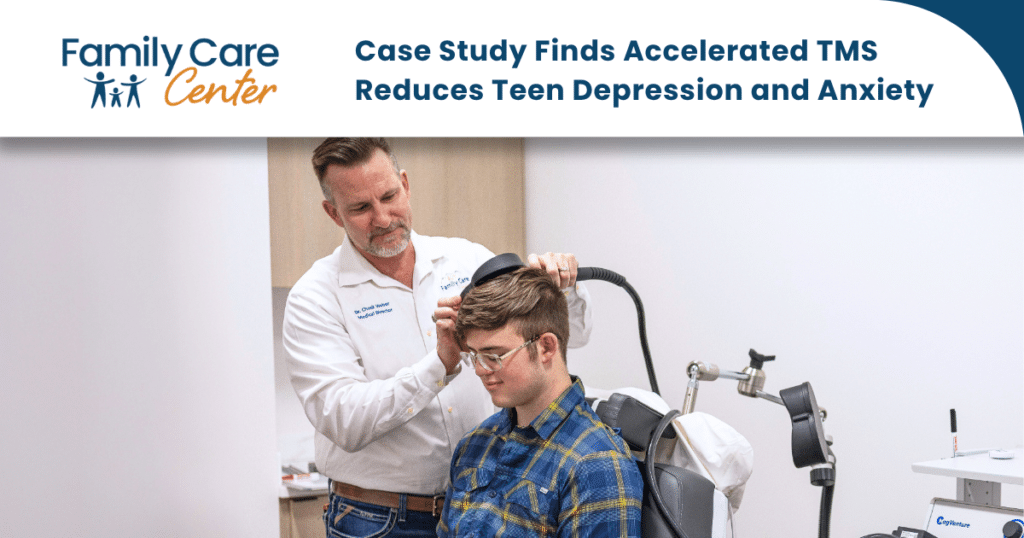
The sessions themselves were straightforward. I sat in a chair. A magnetic coil was positioned against my head. I felt rhythmic tapping—strange at first, then familiar. No pain. No loss of consciousness. Just repetition. What surprised me wasn’t the treatment. It was what didn’t happen.
- I didn’t feel worse.
- I didn’t feel destabilized.
- I didn’t feel hijacked by side effects.
Instead, slowly—almost imperceptibly at first—things began to soften.
The moment I realized something was different
There wasn’t a single lightning-bolt moment. No dramatic “before and after” montage. The change showed up quietly.
- One morning, I noticed my thoughts weren’t racing.
- Another day, my chest wasn’t tight.
- I slept and woke up without dread.
- I handled stress without spiraling.
- The volume had been turned down.
- The internal chaos that once felt relentless became manageable, then minimal.
My depression and anxiety—once so consuming they distorted my sense of reality—dropped significantly. Life became livable.
What it feels like when your nervous system calms
People often ask what TMS “feels like” when it works. For me, it felt like coming home to my body. My thoughts slowed enough to be intentional. My emotions felt proportionate. I could experience stress without collapsing under it. Joy didn’t feel foreign or suspicious anymore—it felt accessible.
I wasn’t numb. In fact, TMS made me feel more present. More embodied. More myself.
This distinction matters. Effective treatment doesn’t flatten emotion; it restores range. It allows sadness without despair, stress without panic, joy without fear of losing it.
Why this matters for people who’ve “tried everything”
TMS is often framed as a “last resort,” but that framing does a disservice to people suffering in silence. Individuals who pursue TMS are not weak. They are not resistant. They are not unwilling to do the work. They are exhausted from fighting a brain that won’t cooperate.
When my depression and anxiety became treatment-resistant, it wasn’t because I hadn’t tried hard enough—it’s because my brain needed a different kind of intervention. TMS doesn’t replace therapy. It doesn’t negate personal work. It creates the conditions where that work can finally take hold.
The team that made healing possible
From the very beginning, my care team made me feel safe, supported, and genuinely cared for. Stephanie, one of my Tucson providers, was warm, welcoming, and endlessly funny, and it was clear how passionate she was about TMS and the relief it could bring. During a time when I was processing complex feelings around my narcolepsy diagnosis, she shared something that stayed with me: we could focus on the “why,” or we could focus on the “what.” That simple shift helped move me toward gratitude and self-compassion.
My TMS Tech Cree created a calm, grounding space that made the day-long drive from my home to the Tucson clinic feel completely worth it. Her gentle presence, steady listening, and quiet strength carried me through each visit, and I’m deeply grateful for that season of care with her.
And from the moment I walked in, Jules and Ideck at the front desk brought warmth and light to every interaction. Their bright, welcoming energy made me feel seen and remembered each day, setting the tone for the care I received throughout my TMS journey.
Thanks to the TMS treatment I received at Family Care Center Tucson, I left as the version of myself that had been buried under years of noise. I left feeling regulated. Grounded. Capable. And steady.
Why I’m telling this story
I’m telling this story because too many people believe they’re broken when they’re actually stuck in a neurological loop that deserves compassion and proper treatment.
I’m telling it because TMS isn’t talked about enough outside of clinical settings.
And I’m telling it because hope doesn’t always look like fireworks—sometimes it looks like quiet mornings, steady breathing, and a mind that finally rests.
If you’re reading this and you feel like you’ve tried everything, I want you to know this:
You’re not failing treatment. Treatment just needs to effectively meet your brain where it is. TMS met me there—when I came in like a wrecking ball. And it gave me back something I thought I had lost for good: peace.
Stock photo courtesy of elenaleonova from Getty Images Signature.