
For Tyler B., living with depression was not just difficult. At its worst, it felt life-threatening.
To the public, Tyler was calm, confident, and composed — a familiar face delivering the news each morning. Behind the anchor desk, he appeared steady and put together. Inside, he was struggling to survive.
Tyler has always been a little cynical, and depression made that edge even sharper. Each day felt heavier, both for him and for those around him. He tried to hide his struggle, but it didn’t always work.
“Most people didn’t see I was fighting something,” Tyler says. “They just thought this was who I am. That made it even harder, especially since my job as a TV news anchor puts me in the public eye. Even on my darkest days, I had to act like everything was fine.”
Behind the scenes, the burden kept growing.
A long journey with treatment
Tyler has spent most of his adult life working on his mental health, with over 15 years in therapy and about 10 years on medication. When the pandemic started, his doctor added another prescription to help quiet what he calls a growing depressive “voice” in his head. For a while, the combination helped, but eventually, it wasn’t enough.
“I’ll be honest,” Tyler says. “There were two times I thought this disease might kill me—once, about 10 years ago when I started medication, and again recently when my meds stopped working. It was clear that medication wasn’t enough anymore. The thoughts kept coming back.”
How his work connected Tyler to TMS
For Tyler, learning about transcranial magnetic stimulation (TMS) marked a hopeful turning point in his search for effective help.
Dr. Mirielle Reece from Family Care Center visited Tyler’s workplace, KOLD TV, to talk to another reporter about Family Care Center services in Tucson. Dr. Reece shared how TMS can be an effective, durable solution for people whose depression doesn’t respond to therapy or medication.
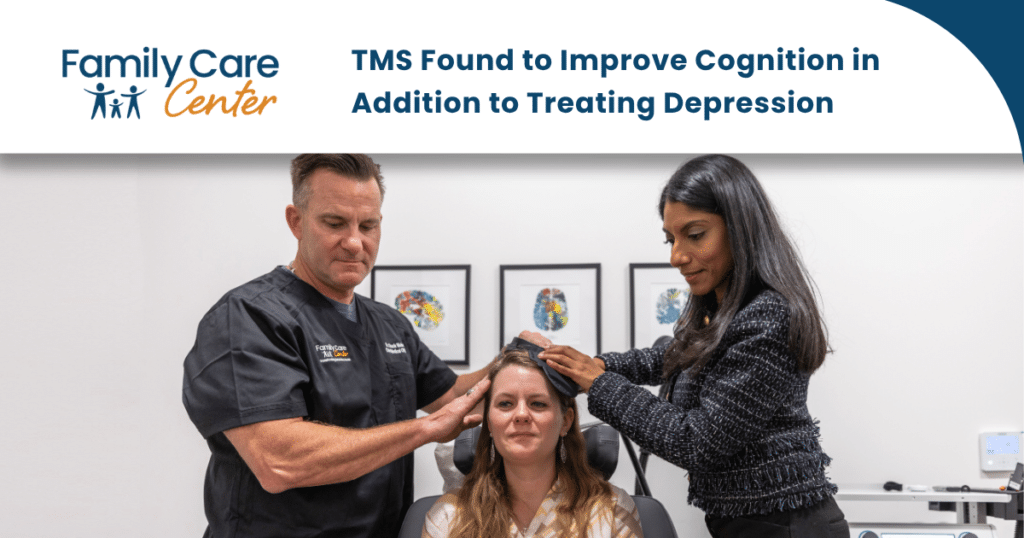
TMS is a safe, non-invasive outpatient treatment for teens and adults. It fits into daily routines and doesn’t require new medications or downtime. Most insurance plans cover TMS, and research shows it can make a real difference for depression and anxiety
Tyler had heard of TMS before, but hearing it this time, it felt important.
“I was just coming out of a depressive dive,” he recalls. “After her interview, I went over, got her card, and made an appointment.”
It felt like a door opening, one he was willing to walk through.
The first days of TMS treatment
Like many others, Tyler felt nervous on his first day of TMS. The experience was new and a little intimidating.
“You’re having a big thing placed near your head, and you can feel it pulsing in a way you’re not used to,” he says. “The sensations were strange at first, like a rapid tapping or light knocking on the scalp.” Despite the initial nerves, there was a sense of curiosity driving him. “I wanted to see if this could help.”
After the session, Tyler noticed a slight tingling or numbness, but it subsided quickly. “It was nothing painful, just different,” he recalls, “and it made the next sessions easier as I knew what to expect.”
What helped most was the care he received. “The Tucson TMS team at Family Care Center genuinely cared about me,” he shared. “I didn’t feel like just another patient.”
Pushing through the hard days
At the start of treatment, Tyler noticed his depressive thoughts got a little worse, just as his care team had warned him might happen.
“My mindset was, ‘Of course it’s flaring up. We’re kicking the hornet’s nest,’” he says. “I figured it was part of the process, and it was.”
Within about a week, those symptoms eased, and Tyler kept coming back.
“TMS is a commitment,” he says. “It was a half-hour drive each way through slow Tucson traffic. But knowing who was there and that they supported me made it easier. I even started a podcast routine for the drive.”
The moment everything shifted
About four to five weeks into treatment, Tyler experienced a moment he never expected.
“I was playing video games with friends one night when I had this thought: ‘I love my life.’ That had never been in my vocabulary,” he says.
That’s when Tyler realized something real was changing for him.
“This wasn’t a placebo,” he says. “Something positive was waking up in my mind.”
Life after TMS
Tyler and the people around him noticed the changes.
“People say I’m more optimistic, easier to be around, and less focused on the little annoyances that used to consume me,” he shares.
Now that treatment is complete, Tyler feels a new sense of ability.
“I have the bandwidth to care for myself now,” he says. “I exercise. I relax. Before TMS, I had zero motivation to do those things.”
Hear more of Tyler’s story directly from him. Watch his KOLD Tucson TV interview.
A message for anyone who feels unsure
Tyler understands why people might hesitate, especially if they’ve been dealing with depression for a long time.
“I’m analytical. I’m negative by nature. I don’t sugarcoat,” he says. “So, when I say this treatment appears to have changed my life and possibly saved it, I mean it.”
His advice is simple and honest.
“You don’t have to keep suffering. You’ll miss 100% of the shots you don’t take. If you don’t try TMS, you’ll never know if it could be the solution you’ve been looking for.”
Read more patient stories
Every mental health journey is different. If Tyler’s story spoke to you, we invite you to read more patient stories from Family Care Center. These experiences show the many paths people take toward healing, supported by caring staff, proven treatments, and a team that truly listens.
Our patients share how therapy, medication management, and TMS have helped them reconnect with hope, confidence, and daily life.