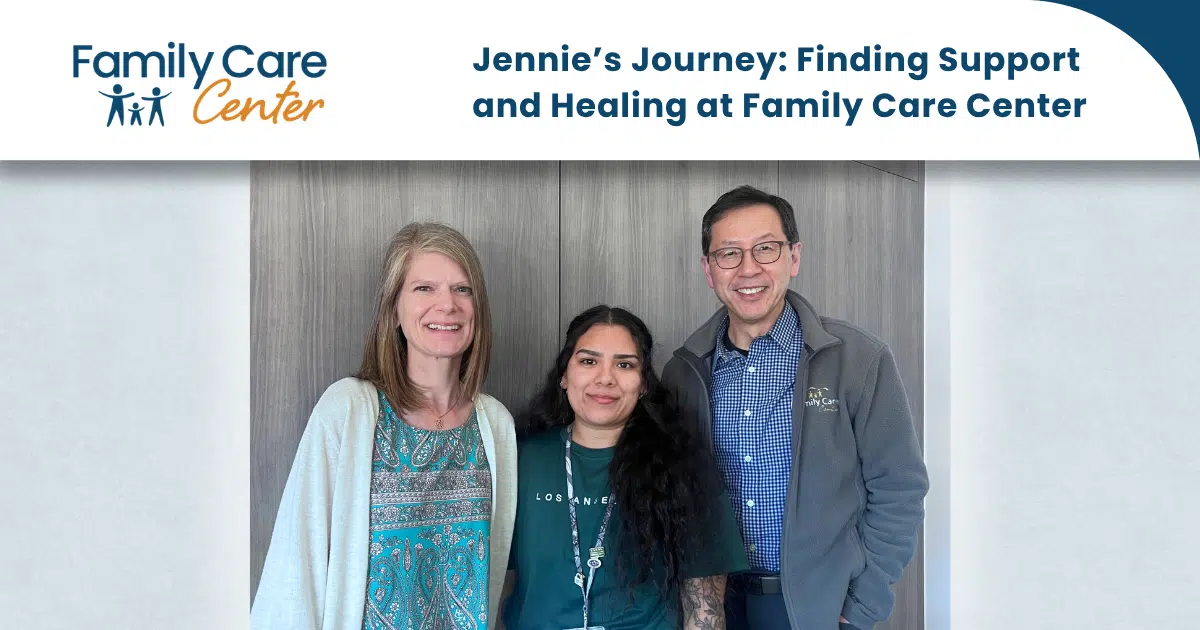
Jennie, now 68, has faced depression and PTSD for much of her life. As an incest survivor, her childhood was marked by difficult family relationships that left deep wounds. “My mom never wanted children and reminded me of it daily,” Jennie says. She was born out of wedlock and grew up with a stepfather who adopted her and sexually molested her repeatedly for 5 years. This made her early years growing up confusing and painful. “I was only a child, and I carried a lifetime of questions and pain that no one seemed to answer,” she remembers.
Despite these challenges, Jennie built a full and meaningful life. She married her high school sweetheart and later her second husband, with whom she raised a son and took in two additional children. Professionally, she thrived in the insurance industry, leading teams and forming lifelong friendships. Yet even as she succeeded in work and family, her mental health struggles persisted.
Finding the right support through integrated care
“I’ve been in counseling most of my adult life, but it was hard to find consistency,” she shared. “Therapists would move away, and progress would stall,” she said.
Things started to change when her primary care doctor suggested Family Care Center where she is seen for therapy, psychiatry, and transcranial magnetic stimulation (TMS). “My care team has been absolutely fantastic,” Jennie says. “I’m truly cared for by Psychiatrist Dr. Anthony Park, Therapist Cristyn Smith, and TMS specialist Marina Labra.”
The clinic’s integrated care approach means that her therapy, psychiatric care, and TMS treatments are coordinated, allowing the team to work together and build on Jennie’s previous progress.
“Never before have I felt this supported,” Jennie shared. “Everything is in one place, everyone communicates, and they truly understand my history and needs.”
How TMS treats PTSD and trauma
Outside of her ongoing therapy and psychiatry sessions, Jennie recently completed TMS. This cutting‑edge, FDA‑approved, non‑invasive treatment uses magnetic pulses to stimulate areas of the brain involved in mood and emotion regulation. It’s often recommended when traditional therapies and medications haven’t delivered the relief someone needs.
TMS has been shown to help with depression and anxiety symptoms, and it can also benefit people with PTSD and trauma-related challenges when used as part of a complete care plan.
“I was a little nervous at first,” she recalls. “I had some minor headaches and fatigue, but overall, I feel better. I feel like my depression is improving.”
For trauma survivors like Jennie, TMS helps not only by reducing symptoms but also by supporting the brain after years of stress and alertness. When combined with therapy and psychiatric care, TMS can help people manage their emotions better and make their nervous system less sensitive to triggers from past trauma.
Empathy and understanding at every step
Jennie appreciates the empathy she feels throughout her care, not just the relief from symptoms. “When Dr. Park acknowledged my PTSD and said, ‘it’s physically inside of you, Jennie,’ I cried. At 68, I finally felt understood.” For Jennie, it was more than just having a treatment plan; it was about being seen and heard as a whole person.
“They don’t just treat my symptoms; they honor my story,” she says. “I finally feel like someone really gets what I’ve been through and what I need to heal.”
A lifelong learner and advocate for healing, Jennie has also done her own reading about incest survivors, finding clarity and validation in what she has endured. She emphasizes that her anger is more directed at her mother than her stepfather, aligning with what many survivors feel. Through this awareness, combined with compassionate clinical support, Jennie has found a sense of empowerment in her healing journey. She continues to see her providers for therapy and psychiatric support and has completed her TMS for PTSD treatment.
Jennie’s advice to other trauma survivors
Reflecting on her journey, Jennie wants others who have faced trauma to know that healing is possible — even after decades of struggle. “My advice is simple: seek help, and don’t give up,” she says. “Family Care Center gave me tools, support, and understanding that I never had before. So why not try it? You truly have nothing to lose.”
Jennie emphasizes that recovery isn’t about erasing the past, but about learning to live fully despite it. “For the first time, I feel like I’m being treated as a whole person, not just a patient,” she shares. “When someone finally sees all of you — your history, your pain, and your resilience — it changes everything. It gives you hope, even in moments you thought hope was gone.”
Read more patient stories
- When Medication Wasn’t Enough: Tyler B.’s TMS Breakthrough
- Lauren’s Story: How TMS Gave Me My Life Back