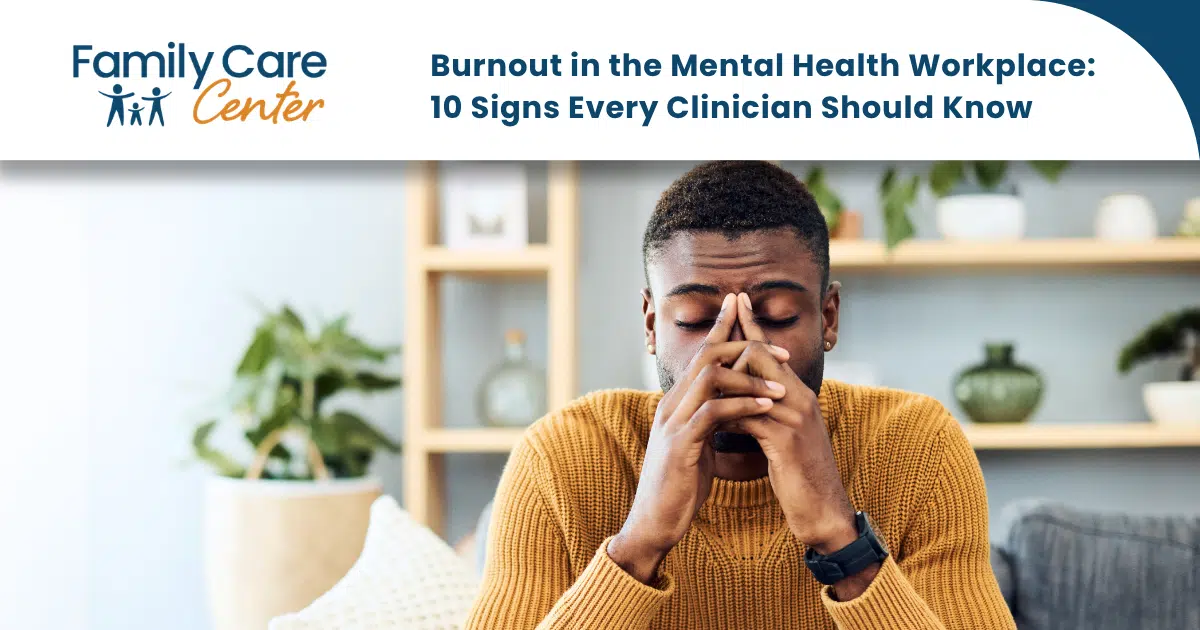
Mental health care is meaningful work, but it can also be demanding in ways that are not always visible. Clinicians are often asked to remain present, compassionate, focused, and clinically grounded while supporting people through distress, trauma, grief, crisis, and uncertainty. Over time, the emotional and practical demands of this work can accumulate.
Burnout can affect highly skilled, deeply committed clinicians, including those who care strongly about their patients and take pride in doing good work.
During Mental Health Awareness Month and throughout the year, it is important to recognize that clinicians also need care, recovery, boundaries, and support. We understand that sustainable care includes supporting the people who provide it.
What is burnout?
Burnout is a work-related state of physical, emotional, and mental exhaustion that can develop after prolonged stress. In the mental health workplace, burnout may be linked to sustained emotional labor, high caseloads, documentation demands, limited recovery time, and the pressure to remain present for others through difficult experiences.
Burnout is often described through three connected experiences:
- Emotional exhaustion — Feeling depleted by the ongoing emotional demands of work
- Detachment or depersonalization — Feeling disconnected, numb, or less emotionally present
- Reduced sense of accomplishment — Questioning whether your work is effective or meaningful
Burnout is not a personal failure. It is often a signal that the demands placed on a person have exceeded the resources available to manage them. For clinicians, this distinction matters. The very qualities that support strong clinical care — empathy, responsibility, commitment, and attentiveness — can also increase vulnerability when they are not balanced with boundaries and recovery.
Burnout is not the same as depression
Burnout and depression can share some overlapping symptoms, such as fatigue, low motivation, irritability, or changes in sleep. However, they are not the same.
Burnout is typically tied to work or professional stress. A clinician may feel depleted or detached in the workplace, but still feel some connection, pleasure, or relief in other areas of life. Depression is a diagnosable mental health condition that may affect mood, energy, thinking, sleep, appetite, and functioning across multiple settings.
This distinction is important because it supports more accurate next steps. Burnout may improve with changes in workload, support, boundaries, and recovery practices. Depression may require a clinical evaluation and treatment such as therapy, medication management, or both.
If symptoms are persistent, worsening, or affecting your life beyond work, it may be helpful to seek support from a qualified mental health professional.
Why clinicians may be at risk for burnout
Mental health clinicians often carry responsibilities that are both visible and invisible. A full schedule may be easy to measure. The emotional weight of clinical presence is harder to see.
Common stressors in mental health workplaces may include:
- High caseloads — Limited time between sessions can reduce opportunities to reset
- Back-to-back appointments — Emotional transitions may happen quickly without enough recovery time
- Documentation demands — Charting and administrative tasks can extend the workday
- Emotional session load — Clinicians may hold stories of trauma, grief, fear, and uncertainty
- Productivity pressure — Expectations may compete with the need for thoughtful pacing
- Boundary strain — It can be difficult to stop thinking about work after hours
- System complexity — Policies, billing, documentation rules, and communication gaps can add stress
Many clinicians also manage stressors outside of work, such as caregiving, financial concerns, personal health needs, identity-related stress, or family responsibilities. These factors do not mean someone is not capable. They mean the person is human.
What are signs of burnout at work?
Burnout can feel different from person to person. Some clinicians feel emotionally exhausted. Others feel detached, irritable, or less effective. Some notice physical symptoms before they recognize emotional changes.
Burnout may feel like:
- Starting the day already tired
- Feeling emotionally “used up” after sessions
- Having less patience than usual
- Struggling to stay present with patients
- Feeling disconnected from colleagues
- Dreading documentation or administrative tasks
- Wondering whether your work is helping
- Finding it difficult to leave work at work
These signs can develop gradually. Because clinicians are trained to focus on others, they may overlook their own early warning signs until burnout becomes more disruptive.
10 signs of burnout at work
Recognizing early signs of burnout at work can help you respond before stress becomes more disruptive.
1. Persistent fatigue
You may feel physically or emotionally tired, even after rest.
2. Reduced sense of accomplishment
You may begin to question whether your work is effective or meaningful.
3. Emotional detachment
You may feel less connected during sessions, which can be a protective response to stress.
4. Increased irritability
Small frustrations may feel harder to manage.
5. Difficulty concentrating
Tasks such as documentation or planning may require more effort.
6. Dreading work responsibilities
You may feel tension or avoidance before starting your workday.
7. Feeling overly responsible for outcomes
You may feel accountable for factors outside your clinical role or control.
8. Trouble maintaining boundaries
You may find yourself working beyond scheduled hours or thinking about work constantly.
9. Physical symptoms of stress
Headaches, muscle tension, or sleep changes may be associated with chronic stress.
10. Difficulty disengaging after work
You may continue replaying sessions or thinking about cases long after your day ends.
If several of these signs are present over time, it may be helpful to explore additional support.
How to deal with stress at work
Managing stress in the mental health workplace often requires both immediate strategies and long-term changes. Quick coping tools may help in the moment, but sustainable care usually also requires boundaries, support, and realistic expectations.
Helpful strategies may include:
- Micro-breaks — Take 30 seconds between sessions to breathe, stretch, or step away from the screen.
- Grounding — Notice what you can see, hear, and feel to reconnect with the present moment.
- Paced breathing — Slow, steady breathing may help reduce acute stress.
- Emotion labeling — Silently naming what you feel may create space before reacting.
- Energy audits — Notice which tasks, interactions, or patterns drain energy and which restore it.
- Consultation — Use supervision, peer support, or clinical consultation before stress becomes impairment.
- Workload reflection — Identify whether demands, documentation, or scheduling patterns need adjustment.
These strategies are not about ignoring real problems. There are ways to respond to stress while also identifying what may need to change.
How to recover from burnout in the mental health workplace
Burnout recovery is often gradual. It may involve personal changes, workplace adjustments, and support from others. A single day off may help with short-term fatigue, but deeper burnout often requires a more sustained response.
Recovery may include:
- Restoring consistent sleep and nutrition
- Rebuilding regular breaks into the workday
- Reducing unnecessary after-hours work when possible
- Strengthening boundaries around time and emotional availability
- Seeking therapy, supervision, or consultation
- Reconnecting with values and purpose in a realistic way
- Addressing workplace factors that contribute to overload
Resilience is not about pushing through indefinitely. It is the capacity to adapt, recover, and remain connected to what matters with appropriate support. For clinicians, resilience is strengthened not only by individual coping skills, but also by healthy systems, supportive relationships, and realistic demands.
Why boundaries are part of ethical care
In mental health care, boundaries protect clinical presence, judgment, empathy, and professional integrity. They help clinicians remain engaged without becoming overextended.
Examples of healthy boundaries may include:
- Time boundaries — Protecting breaks, documentation time, and time away from work.
- Emotional boundaries — Recognizing what belongs to you and what belongs to the patient.
- Cognitive boundaries — Reducing rumination and limiting work-related mental rehearsal after hours.
- Relational boundaries — Maintaining role clarity with patients, colleagues, family, and friends.
A helpful boundary statement might sound like: “I want to give this the attention it deserves, and I am at capacity right now. Let’s make a plan to address it at the appropriate time.”
Boundaries are not a rejection of care. They are one way clinicians preserve the capacity to care well.
When to seek additional support
It may be helpful to seek professional support if burnout symptoms persist, worsen, or begin to affect your functioning outside of work.
Support may be especially important if you notice:
- Ongoing sleep disruption
- Loss of interest in activities outside work
- Persistent sadness, anxiety, or irritability
- Increased use of alcohol or substances to cope
- Difficulty completing essential responsibilities
- Thoughts of self-harm or not wanting to be here
If you are in immediate danger or experiencing thoughts of suicide, call or text 988 for the Suicide & Crisis Lifeline, or go to the nearest emergency department.
How Family Care Center can help
At Family Care Center, we understand that mental health professionals are people first. Our team provides compassionate, evidence-based care for individuals experiencing stress, burnout, anxiety, depression, trauma-related symptoms, and other mental health concerns.
Care may include therapy, psychiatry, and medication management, or other services depending on your needs. Our approach is collaborative and personalized, with a focus on helping each person find support that fits their circumstances.
If burnout is affecting your well-being, you do not have to wait until things feel unmanageable. Support is available when you are ready.
Contact our team today for more information or to schedule an initial appointment.
Frequently Asked Questions
What are the early signs of burnout at work?
Early signs may include fatigue, irritability, reduced focus, emotional detachment, and difficulty recovering after work.
What does burnout feel like for clinicians?
Burnout may feel like emotional exhaustion, reduced presence during sessions, or questioning whether your work is making a difference.
Is burnout the same as depression?
No. Burnout is typically tied to work stress, while depression may affect mood and functioning across many areas of life.
How can clinicians deal with stress at work?
Clinicians may benefit from boundaries, brief resets, grounding techniques, consultation, supervision, and support from trusted providers.
How can someone recover from burnout?
Recovery may involve rest, workload changes, therapy, stronger boundaries, and consistent routines that support well-being.
Can burnout affect physical health?
Chronic stress may be associated with fatigue, headaches, muscle tension, sleep changes, or digestive discomfort.
Can burnout happen if I like my job?
Yes. Burnout can occur in meaningful work, especially when demands are high and recovery time is limited.
Is self-care enough to address burnout?
Self-care can help, but burnout may also require workplace changes, consultation, stronger boundaries, or professional support.
When should I seek help for burnout?
Consider seeking support if symptoms persist, worsen, or begin affecting your relationships, health, or daily responsibilities.
Why discuss burnout during Mental Health Awareness Month?
Mental Health Awareness Month is a helpful reminder that mental health matters for everyone, including clinicians and care teams.